

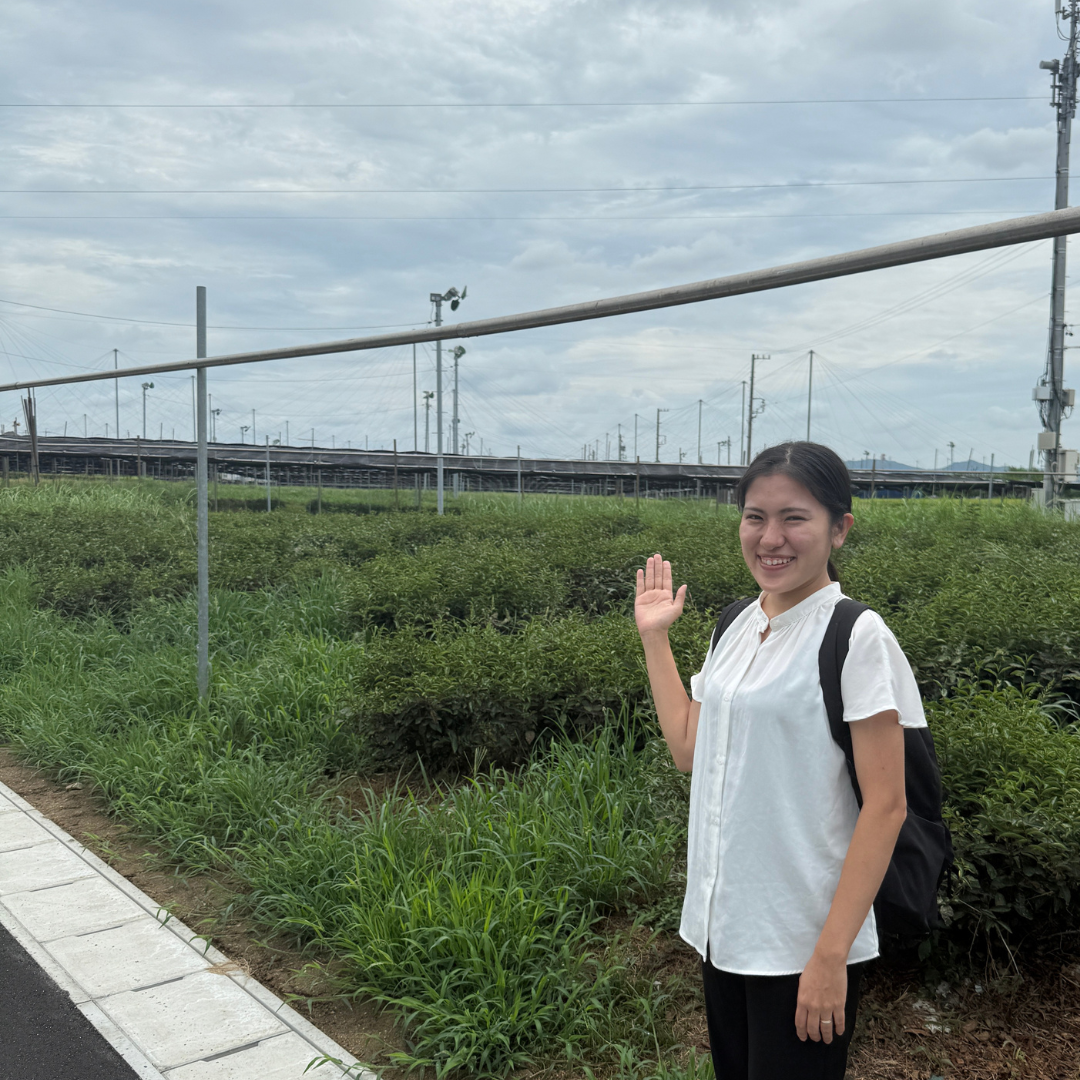
Visiting a Tea Farm — Where Matcha Truly Begins
Visiting a Tea Farm — Where Matcha Truly Begins
Recently, we visited a tea farm to reconnect with the origin of matcha.
We often experience matcha as a fine green powder in a bowl, but behind every cup lies a quiet accumulation of seasons, soil, and human hands. This visit reminded us that matcha is not only a beverage — it is both agriculture and culture.
In the Morning Fields

We arrived early in the morning. The air was still cool, and tiny droplets of dew remained on the leaves.
Tencha — the raw material of matcha — is grown under shade before harvest. This shading process reduces bitterness and gently develops umami and sweetness.
One phrase from the farmer stayed with us:
“The taste of matcha is decided before it is picked.”
In other words, the flavor is created during cultivation long before the leaves are ever ground into powder.
The Individuality Created by Handwork

Harvest timing is judged by the condition of the leaves.
Steaming time changes depending on temperature and humidity.
Drying and sorting require constant observation.
Nothing is completely uniform.
Even with the same cultivar, the taste changes each year — much like a wine vintage.
Matcha carries the expression of its season.
The Weight of a Bowl, Ground by Stone

Finally, we were shown the stone mill grinding process.
The leaves are slowly ground to prevent heat from damaging aroma and nutrients.
In one hour, only a small amount can be produced.
There are faster methods, of course — but the traditional way remains because the quality of both flavor and experience changes.
Matcha Is Not Just a Drink — It Is Time
This visit reminded us that matcha is more than a health beverage.
From field to bowl, it carries a continuous chain of human intention.
When preparing a bowl of matcha,
try imagining the seasons, the land, and the people behind it.
The taste becomes deeper.
Next time you drink matcha,
rather than asking only what is inside,
perhaps also feel where it came from.

Written by IKIGAI MATCHA