
Article: Can Matcha Help Reduce Blood Sugar Spikes? What Science Says
Can Matcha Help Reduce Blood Sugar Spikes? What Science Says
Blood sugar spikes occur when glucose levels rise rapidly after a meal. Frequent spikes have been associated with insulin resistance, type 2 diabetes, and other metabolic health concerns.
Recently, researchers have become interested in whether matcha may help support healthier blood sugar responses after eating.

The Short Answer
Current scientific evidence suggests that matcha may help support blood sugar regulation and reduce post-meal glucose spikes, primarily due to its high concentration of catechins—especially epigallocatechin gallate (EGCG).
However, the evidence does not prove that matcha alone can prevent blood sugar spikes. The observed effects are generally modest, and more human clinical studies are needed.
Why Matcha Is Different
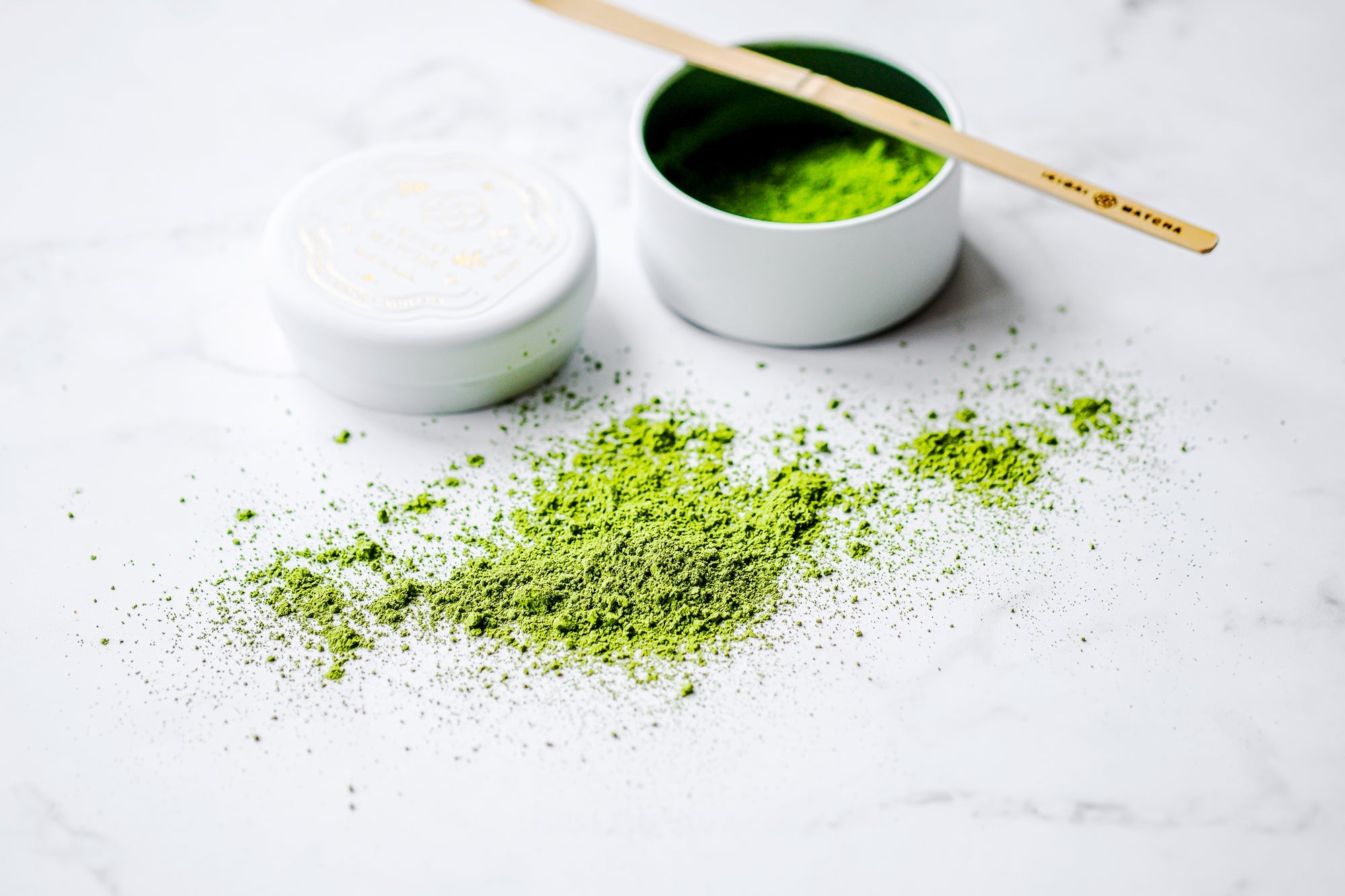
Unlike regular green tea, matcha is made from finely ground tea leaves, meaning you consume the entire leaf.
As a result, matcha provides higher concentrations of beneficial compounds, including:
-
EGCG (Epigallocatechin Gallate)
-
Catechins
-
L-theanine
-
Chlorophyll
Among these compounds, EGCG has received the most scientific attention for its potential effects on glucose metabolism.
Potential Mechanism #1: Slowing Carbohydrate Digestion
Laboratory studies suggest that catechins may inhibit digestive enzymes involved in breaking down carbohydrates.
When carbohydrates are digested more slowly, glucose enters the bloodstream at a slower rate, potentially reducing the size of post-meal blood sugar spikes.
This mechanism is one of the leading explanations for the blood sugar benefits observed in green tea and matcha research.
Potential Mechanism #2: Improving Insulin Sensitivity
Insulin helps move glucose from the bloodstream into cells.
Several studies suggest that EGCG may improve insulin sensitivity, allowing the body to use insulin more effectively.
Better insulin sensitivity may contribute to improved blood sugar control following meals.


What Human Studies Have Found
A 2025 systematic review and meta-analysis that included 41 randomized controlled trials (RCTs) found that EGCG supplementation produced statistically significant improvements in:
-
Fasting blood glucose
-
HbA1c
-
Insulin resistance (HOMA-IR)
However, researchers also concluded that the benefits were generally modest and may not be clinically meaningful for everyone.
Another meta-analysis involving 27 randomized controlled trials and 2,194 participants reported that green tea consumption significantly reduced fasting blood glucose levels, although effects on insulin and HbA1c were less consistent.
A separate meta-analysis focused on individuals with type 2 diabetes found improvements in:
-
Fasting blood glucose
-
HbA1c
-
Insulin resistance
among participants consuming green tea interventions.
What This Means in Practice
Based on current evidence, scientists can reasonably say that:
✅ Matcha contains bioactive compounds that may support healthy glucose metabolism.
✅ EGCG and catechins may help improve insulin sensitivity and moderate post-meal blood sugar responses.
✅ Regular matcha consumption may contribute to better overall glycemic control as part of a healthy lifestyle.
However:
❌ Matcha is not a treatment for diabetes.
❌ Matcha should not replace medical advice, medication, or a balanced diet.
❌ Current evidence does not prove that matcha completely prevents blood sugar spikes.
Conclusion
The scientific evidence is promising.
Matcha is rich in EGCG and other catechins that may help support blood sugar regulation through multiple mechanisms, including slowing carbohydrate digestion and improving insulin sensitivity.
While researchers continue to study its effects, current human trials suggest that matcha may be a valuable addition to a healthy diet for individuals interested in supporting metabolic health and reducing excessive post-meal glucose fluctuations.
References
-
Alsubhi et al. (2025). Effect of Epigallocatechin Gallate on Glycemic Index: A Systematic Review and Meta-Analysis of Randomized Controlled Trials.
-
Xu et al. (2020). Effects of Green Tea Consumption on Glycemic Control: A Systematic Review and Meta-Analysis of Randomized Controlled Trials.
-
Wang et al. (2024). The Effect of Green Tea on Patients with Type 2 Diabetes Mellitus: A Meta-analysis.

Written by IKIGAI MATCHA